
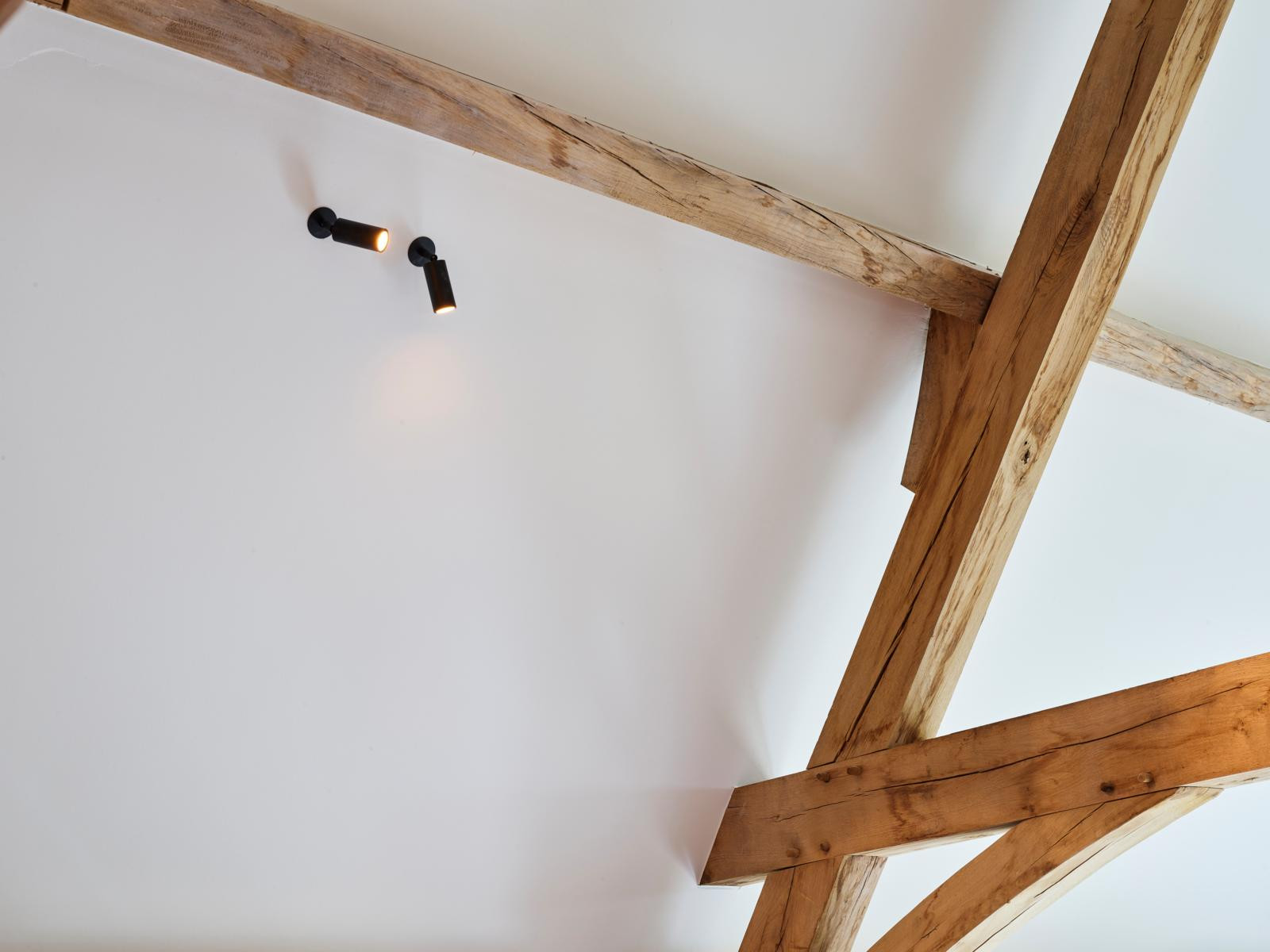
What lighting should you choose for an attic with a sloped roof?
An attic with a sloped roof has a lot of charm, but it also brings some challenges when it comes to lighting. Because of the slanted walls, limited ceiling height, and often restricted natural light, dark corners can appear more easily. However, with the right lighting, you can not only make the space more practical, but also make it feel larger and more inviting.
Whether your attic serves as a bedroom, office, hobby room, or extra living space, a well-thought-out lighting plan makes a world of difference.
Choose lighting that suits a sloped roof
Not every lamp is suitable for an attic. With a sloped ceiling, it’s important to choose lighting that takes up little space and distributes light well.
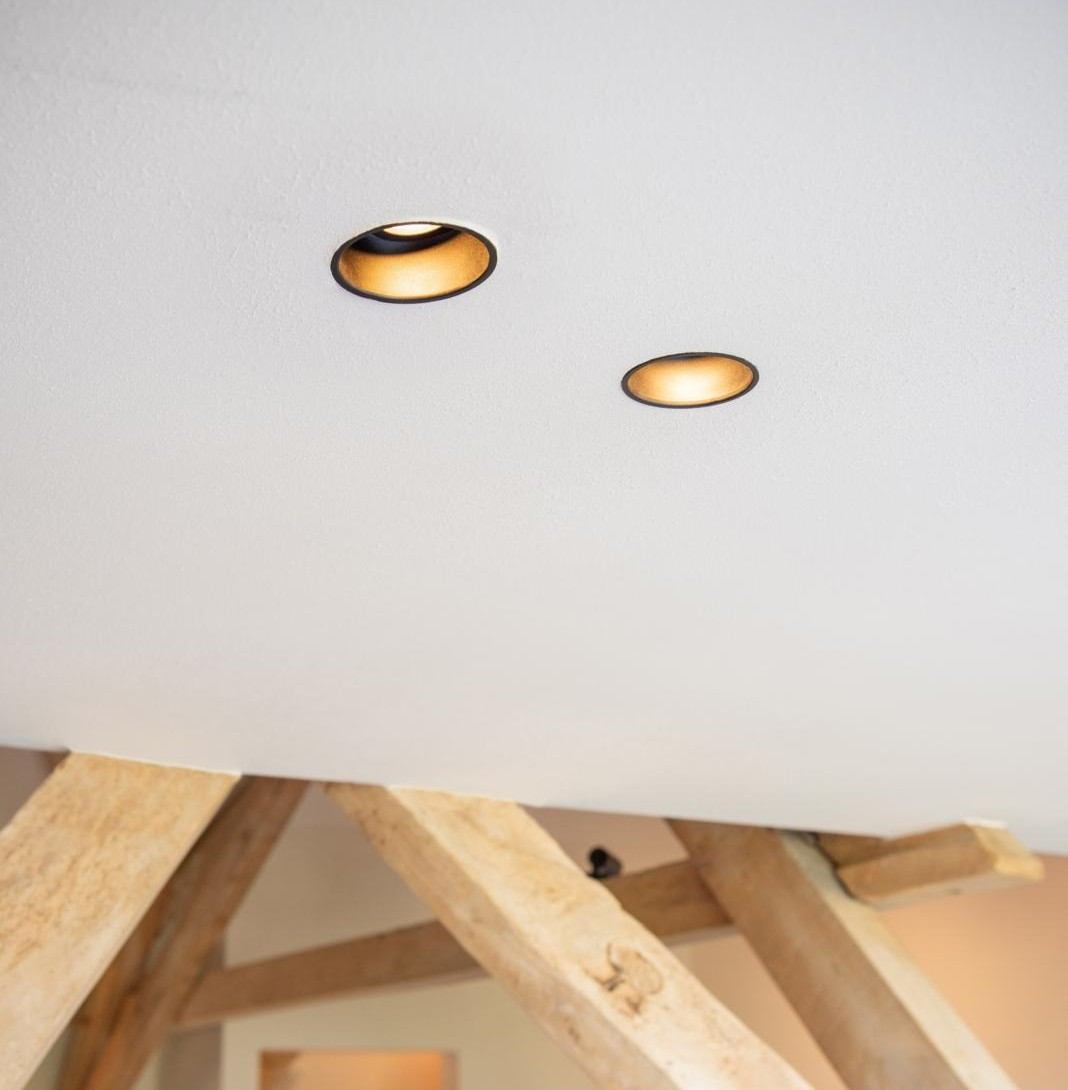
Recessed spotlights
Recessed spotlights remain one of the most popular choices for attics. They are neatly built into the ceiling, take up no extra space, and create a clean, streamlined look.
By distributing multiple spotlights across the room, you avoid dark areas and achieve an even, general base lighting.
Track lighting and surface-mounted spotlights
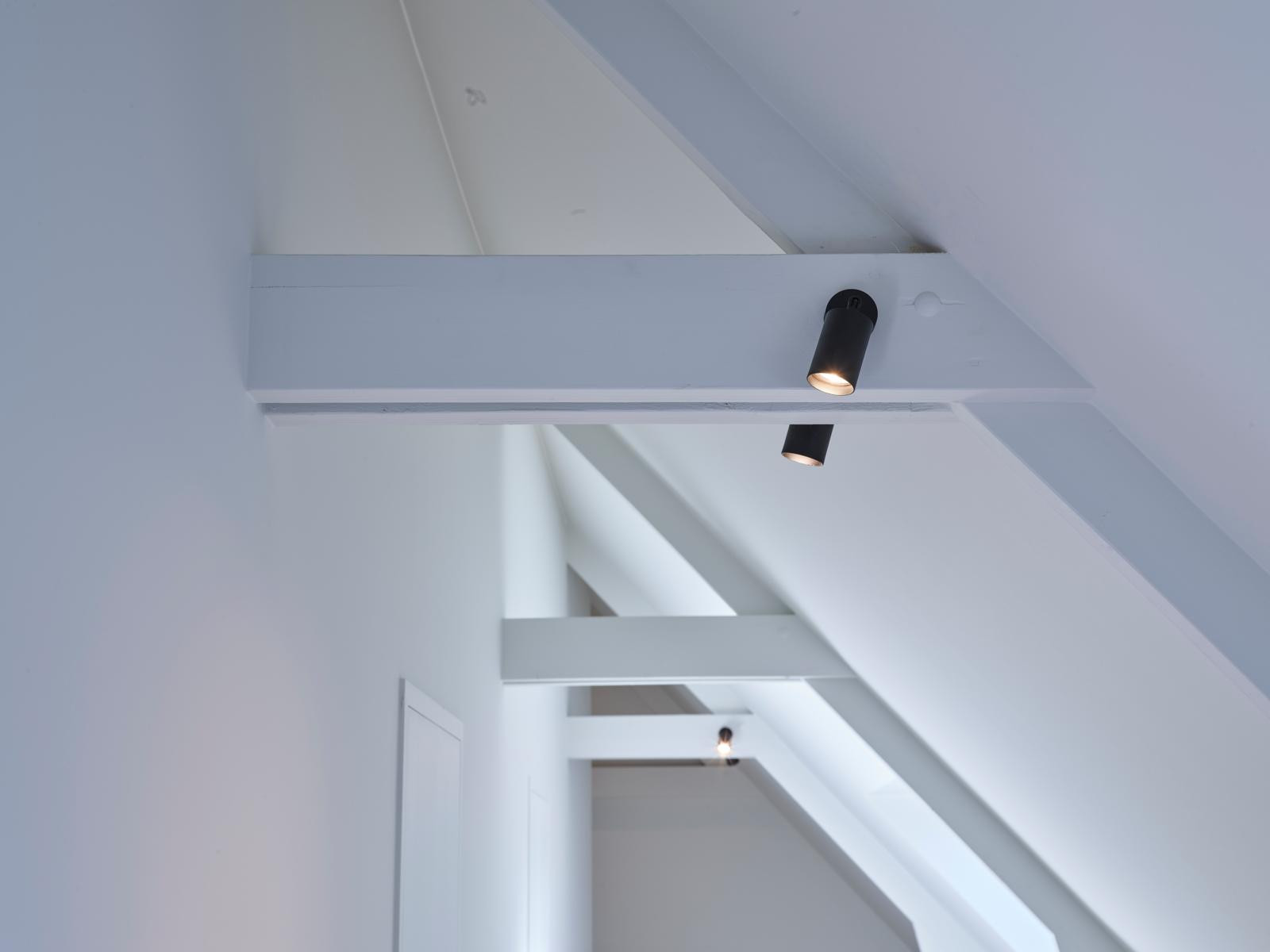
Is recessed lighting not possible? Then track lighting or adjustable surface-mounted spotlights are an excellent alternative.
The big advantage is that you can direct the light exactly where you need it, for example toward a desk, wardrobe, or reading corner. In addition, you can easily adjust the setup later on.
LED strips
A solution that is becoming increasingly popular in attics is LED strips. This type of linear lighting is integrated into a profile and takes up very little space, making it ideal for sloped ceilings.
LED strips provide a smooth, even distribution of light without the individual light beams you get with spotlights. This reduces shadows and makes the space feel calmer and larger.
They can be installed, for example:
along the ridge of the roof
under wooden beams
in a dropped ceiling
as indirect lighting along a wall or knee wall
For modern attics, LED strips often form a stylish combination with spotlights or track lighting.
Combine different types of lighting
A common mistake is using only a single central light. Due to the shape of a sloped roof, parts of the space often remain poorly lit.
Good attic lighting consists of a combination of:
General lighting: spotlights, LED strips, or track lighting
Functional lighting: desk lamp or reading lamp
Ambient lighting: indirect lighting, wall lights, or dimmable lighting.
This way, you create a space that feels both practical and cozy.
What light color should you choose?
The right light color has a major impact on the atmosphere of a room.
2700K – 3000K (warm white) → suitable for bedrooms and relaxation areas
3000K – 4000K (neutral white) → suitable for home offices, hobby rooms, and study spaces
5000K+ (cool white) → suitable for workshops or technical spaces
Extra tips for a brighter attic
Want to make a dark attic look larger and brighter? These adjustments can help:
choose light wall and ceiling colors
also illuminate the corners
use mirrors to reflect light
choose energy-efficient LED lighting
use dimmers for extra flexibility
What lighting is ultimately the best choice?
For most attics with a sloped roof, a combination of recessed spotlights or track lighting with LED strips works best. This provides sufficient general lighting, a good spread of light, and a modern look without wasting valuable space.
By considering the function of the room, the light color, and the placement of the fixtures, you can create an attic that not only looks good but is also comfortable to use every day.